

A 15-minute team meeting works best when it has a narrow purpose: align priorities, surface obstacles and agree immediate actions. It is too short for a detailed project review, a sensitive conversation or a complicated decision that requires preparation.
Decide what the meeting should make possible before putting it in the diary. If there is nothing that needs discussion or coordination, a written update may be sufficient.
Prepare a short agenda
Ask participants to add essential topics beforehand. Use three prompts: what matters next, what is blocked and what decision or help is needed. Keep routine reporting brief and share detailed material separately.
Choose a time and format that fit the team. Include part-time, remote and shift workers in the planning, and provide an appropriate route for people who cannot attend. A short meeting can still create a barrier if it always happens outside someone’s working hours.
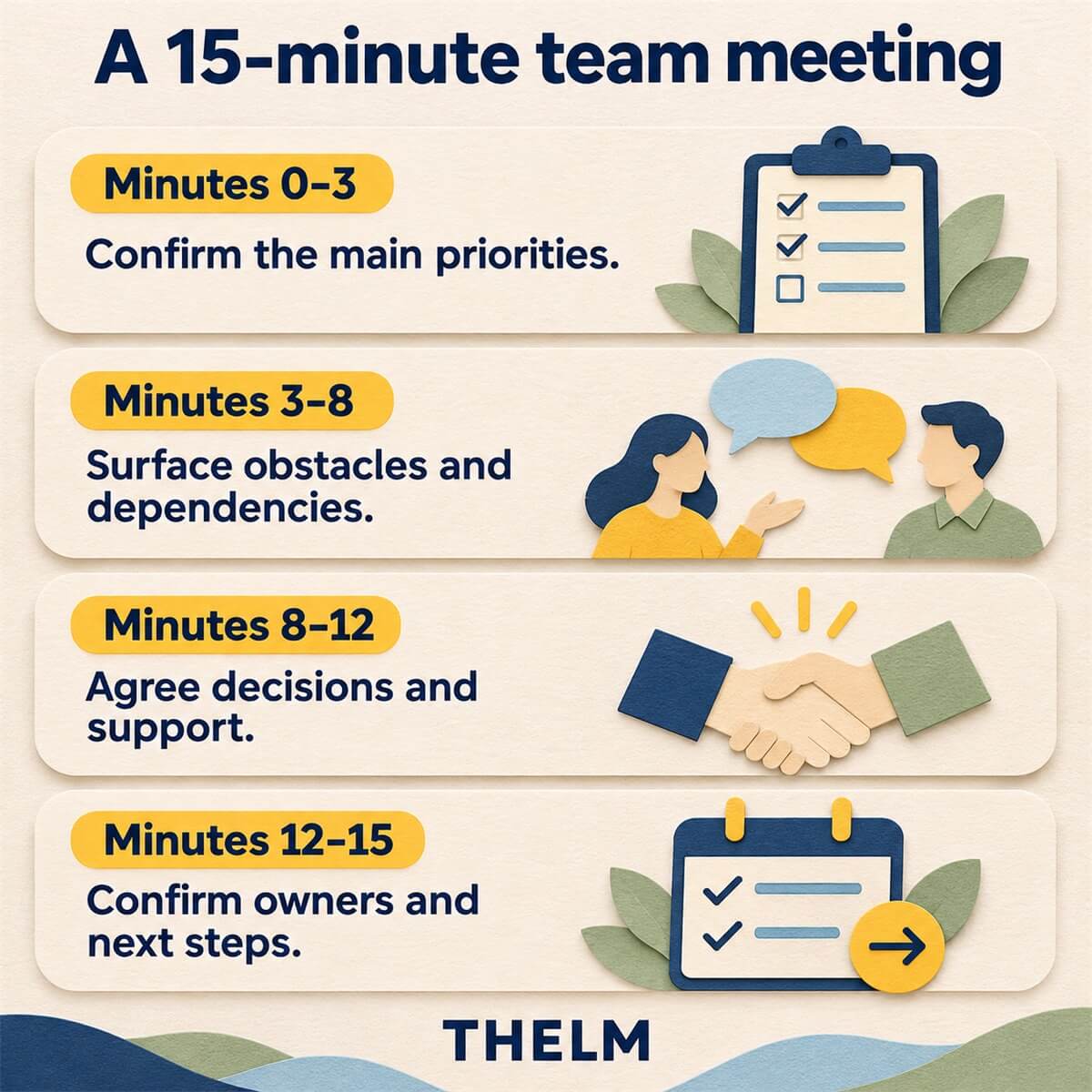
A practical 15-minute structure
| Time | Focus | Output |
|---|---|---|
| 0–3 minutes | Confirm the main priorities | A shared view of what needs attention |
| 3–8 minutes | Raise obstacles and dependencies | Specific requests for decisions or support |
| 8–12 minutes | Agree immediate decisions | Clear next steps or a named follow-up |
| 12–15 minutes | Read back actions | Owners, dates and people to inform |
This is an illustrative agenda. If the discussion consistently needs longer, change the meeting rather than rushing important work to preserve the label.
Keep updates focused on coordination
A useful contribution explains what another person needs to know or do. “The supplier has not confirmed delivery; I need a decision on the alternative by midday” is more actionable than a detailed account of every email exchanged.
Invite quieter participants to contribute without putting them on the spot about personal matters. Allow written input and make sure people joining remotely can hear the discussion and see the same agenda.
Park detail with an owner
Some topics need a separate conversation. Record what needs resolving, who should be involved and when they will meet. A “parking list” with no owner can become a place where important issues disappear.
For example, a fictional delivery team may identify a recurring handover problem. The short meeting can agree temporary cover and appoint two people to examine the process that afternoon. It should not attempt to redesign the whole handover while everyone else waits.
Make the action record usable
Write each action as a specific commitment. Include the owner, due time and any dependency. Distinguish a decision already made from a proposal someone still needs to approve.
Share the short record where the team normally works. Avoid creating a second reporting system that people must maintain solely for the meeting. At the next meeting, review unresolved actions that still matter.
Check whether the meeting earns its time
After a few weeks, ask whether people leave knowing the priorities, what support is available and what they need to do. Remove repeated reporting that does not lead to a decision or useful coordination.
Acas’s remote-management guidance highlights agreeing communication methods and avoiding unnecessary contact. A short, purposeful team meeting should sit within that wider communication arrangement, alongside individual conversations and written information.
End on time when possible. If an urgent matter needs longer, say so explicitly and keep only the people needed for the follow-up.
Related guides
- How to Make Hybrid Meetings Work for Everyone
- How to Review Your Team's Workload Before Adding Another Task
- How to Run a Project Debrief That Leads to Improvements
Published as part of THELM's guide library on 2 November 2026. The archive date places this guide within the series; advice and sources were reviewed on 2 November 2026.