

When one person is the only reliable source of knowledge for a critical task, an absence or change of role can interrupt the work. The answer is to make the process understandable and give others a supported opportunity to practise it.
Approach the experienced colleague respectfully. Their expertise is valuable, and documenting it takes time. Explain the purpose as continuity and shared capability, not a test of whether they have made themselves indispensable.
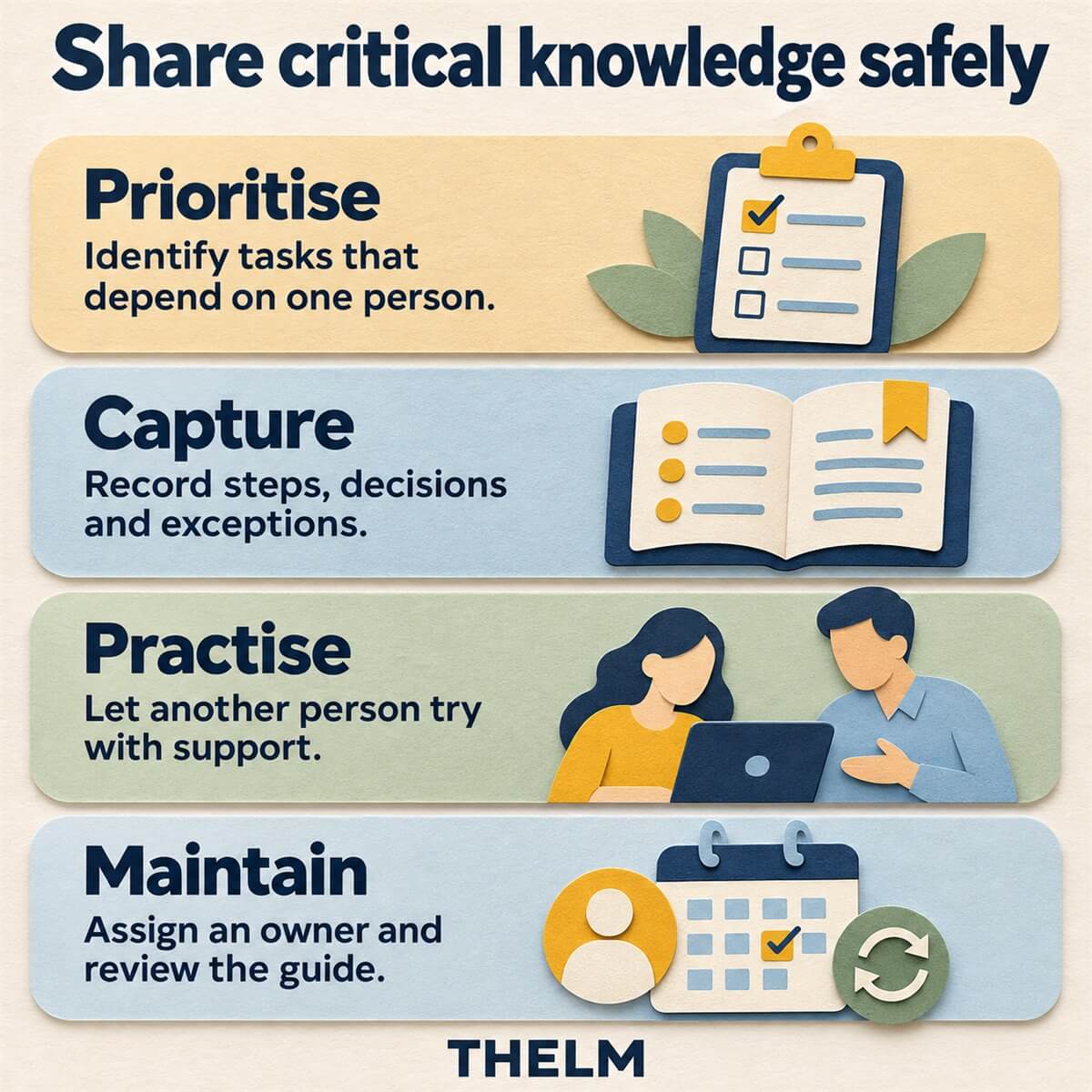
Choose the most important tasks first
Identify work that would be difficult to continue if the person were unavailable. Consider customer commitments, recurring deadlines, specialist decisions and tasks with significant consequences if done incorrectly.
Start with one manageable process. Attempting to capture everything the person knows can create an enormous document that nobody uses. Agree what the backup person needs to do independently and what should still be escalated to a specialist.
Capture decisions as well as steps
A sequence of clicks may explain the normal path but not what to do when something is unusual. Ask the expert to describe what they look for, which exceptions matter and when they stop or seek approval.
Use an example or demonstration with appropriate non-sensitive information. Record the purpose, inputs, checks and output. Keep the guide where the people who need it can find the current version.
A useful process guide
| Section | Question it answers |
|---|---|
| Purpose | What does this process achieve? |
| Inputs | What information and approved access are needed? |
| Steps | What happens in the usual case? |
| Checks | How do we know the result is correct? |
| Exceptions | What can go wrong, and when should we stop? |
| Ownership | Who maintains the guide and answers questions? |
Protect access and confidential information
Do not put passwords, recovery codes or unnecessary personal data in a process guide. Arrange individual access through the organisation’s approved process and keep permissions appropriate to the person’s responsibilities.
If a demonstration involves confidential records, use a safe example or the authorised environment and handling arrangements. A convenient recording can create a new information risk if it captures more than the learner needs.
Let another person try
Ask the learner to follow the guide while the experienced colleague observes. Note where they hesitate, make an assumption or need an explanation. Those moments show where the guide needs improvement.
For a fictional monthly reporting process, the learner might complete a practice version, explain the checks and identify an unusual entry that requires review. A successful demonstration by the expert is not the same as evidence that someone else can do the task.
Make the arrangement sustainable
Protect time for both teaching and practice, and adjust other work where needed. Recognise the expert’s contribution without making them permanently responsible for every question. Agree what the backup person can now handle and where escalation remains appropriate.
Acas’s induction guidance includes supported practice and review of learning. The same practical approach can help when an existing employee learns a critical process.
Assign an owner and review the guide when the process changes. Periodic use by a second person is a better continuity check than a document that was written once and never tested again.
Related guides
- How to Delegate a Task Clearly
- A New Starter's First Week: A Manager's Checklist
- How to Run a Project Debrief That Leads to Improvements
Published as part of THELM's guide library on 2 November 2026. The archive date places this guide within the series; advice and sources were reviewed on 2 November 2026.