

Constructive feedback explains a specific piece of work or behaviour, why it matters and what could happen next. It gives the person enough information to understand your concern or repeat something that went well.
Prepare the facts before the conversation. A label such as “unprofessional” or “not proactive” can mean different things to different people. An observed example is easier to discuss and gives the employee a fair opportunity to explain what happened.
Choose an appropriate moment and setting
Discuss sensitive feedback privately and reasonably close to the event, once you have enough information. If there is an immediate safety issue, act promptly through the relevant process. Otherwise, avoid starting a difficult conversation in a corridor when neither person has time.
Tell the person what you want to discuss. A short explanation allows them to prepare and reduces the chance that a routine meeting feels like an ambush. Check whether you are the right person to give the feedback and whether another process or specialist support is needed.
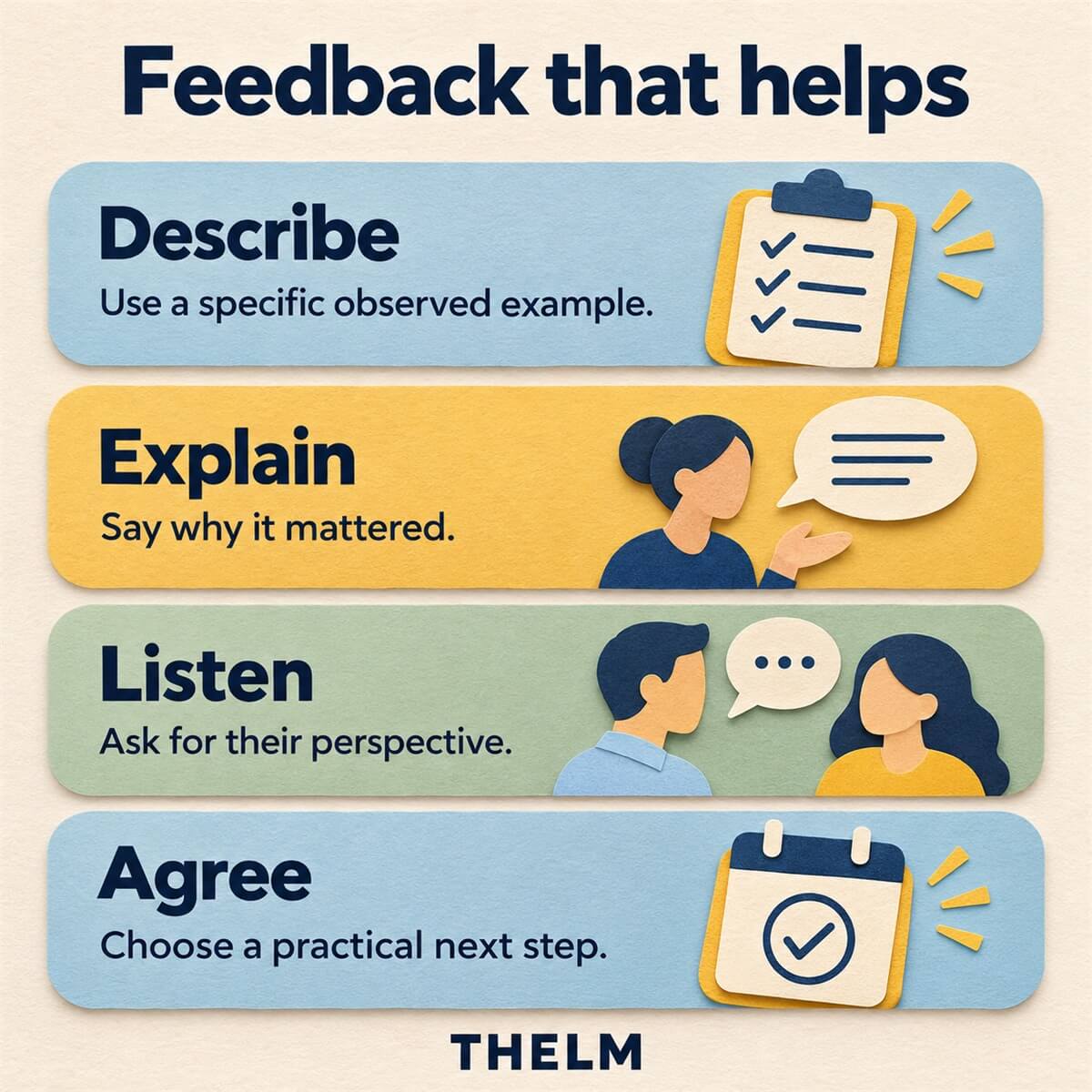
Describe the example and its effect
Use language that separates observation from interpretation. “The revised figures arrived after the agreed deadline, so the team used the earlier version” is more precise than “You do not care about deadlines.” Avoid claiming to know someone’s motives.
Then invite their perspective. There may have been an unclear instruction, an access problem or conflicting priorities. Listening does not require abandoning your expectation; it helps you choose a response that addresses the cause.
Examples you can adapt
| Situation | Possible wording |
|---|---|
| A helpful customer response | You checked the missing information before replying, which meant the customer received one complete answer. What helped you handle it that way? |
| An incomplete handover | The handover did not include the outstanding actions, so the next shift had to reconstruct them. What got in the way of completing that section? |
| Repeated interruptions | In this morning’s discussion, two colleagues were interrupted before finishing their points. I want everyone to have room to contribute. How did you experience the meeting? |
These are illustrative examples, not scripts to deliver mechanically. Use the facts of your situation and ordinary language. For positive feedback, explain the contribution just as carefully as you would explain a problem.
Agree a practical change
Make the next step specific and realistic. For the handover example, that could mean using a short outstanding-actions section, allowing time to complete it and checking the first few handovers together. “Communicate better” does not explain what the person should do differently.
Check what support you owe them. If the problem involves competing instructions, you may need to resolve the priorities. If it involves an unfamiliar task, training or practice may be relevant. Do not make the employee solely responsible for a problem created by the work system.
Follow up and keep the purpose clear
Agree when to revisit the issue and keep a proportionate factual record. Recognise progress when it occurs. Repeating the same criticism without checking the effect of agreed support does little to improve the work.
Acas treats regular feedback as part of ongoing performance management. Serious conduct, discrimination or safety concerns may need a formal response. Follow the relevant procedure rather than presenting an informal feedback conversation as a substitute.
Before you finish, ask the person to describe the agreed next step in their own words. If your understandings differ, clarify them while you are both there.
Related guides
- How to Run a Useful One-to-One Meeting
- What to Do When Two Team Members Keep Clashing
- What to Do When You Do Not Know the Answer as a Manager
Published as part of THELM's guide library on 2 November 2026. The archive date places this guide within the series; advice and sources were reviewed on 2 November 2026.