
A recognition scheme can appear open to everyone while favouring the people a manager sees most often. Daytime meetings, office-based nomination forms and a focus on headline project work can make some contributions easier to notice than others.
Fair recognition across remote, part-time and shift workers starts with access and context. People need a usable way to take part, and their contribution needs to be considered in relation to the role and opportunities they actually have.
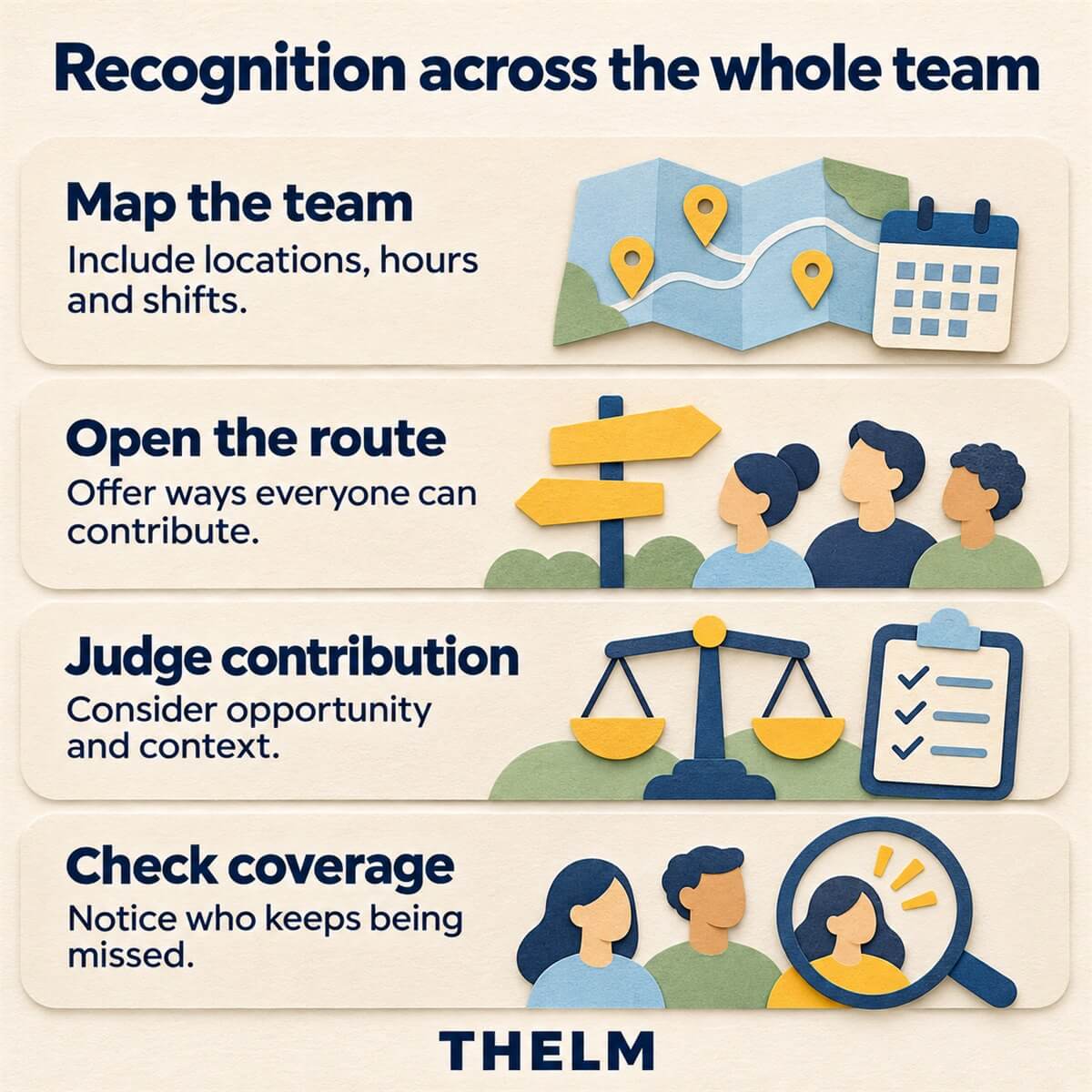
Map the team before designing the process
List working patterns, locations and the channels people can realistically use during their working time. Include people who rarely attend an all-staff meeting or who do not sit at a computer. Ask what would make participation practical.
Do not assume that sending one email creates equal access. A colleague working a short weekly shift may have less time to see a message, gather an example and meet a deadline. Build enough time into the process and provide more than one suitable route.
Make the criteria about contribution
Assess the work and its effect, with relevant context. Raw totals can be misleading when hours, responsibilities or opportunities differ. A part-time employee may make a valuable improvement without handling the same volume as a full-time colleague.
For example, a fictional evening team might resolve difficult handovers that daytime managers never see. Ask for evidence from the people receiving the handover, and include that type of contribution in the scheme’s examples.
An access check for your scheme
| Check | Question to ask |
|---|---|
| Information | Can every worker find the criteria and deadline during their working time? |
| Nomination | Can people contribute without attending a particular meeting or using one device? |
| Evidence | Do examples cover service, support, prevention and operational work? |
| Review | Do reviewers understand different roles and working patterns? |
| Recognition | Can the chosen person participate without an avoidable cost or scheduling barrier? |
Keep communication inclusive
Share the reason for recognition through channels the team can access. If you celebrate at a meeting, provide an appropriate follow-up for people who were not there. Avoid making attendance at a social event a condition of receiving appreciation.
Ask the individual how they would like to be thanked. Working remotely does not automatically mean preferring an online announcement, and working part-time does not mean wanting less involvement.
Acas advises employers to avoid disadvantaging home and hybrid workers. Apply that principle when considering visibility, development opportunities and access to recognition.
Review who keeps being missed
Periodically look at participation and outcomes across roles, locations and working patterns. Use information proportionately and avoid publishing small groups of results that could expose individuals. A pattern is a prompt to investigate how the process works, not proof of someone’s motive.
Ask employees for examples of contributions the scheme overlooks. Adjust the route, criteria or review process where needed. Keep ordinary manager thanks available throughout the year so an employee does not have to win a formal selection to feel their work has been noticed.
Related guides
- How to Set Fair Employee Recognition Criteria
- How to Ask Employees What Recognition They Actually Value
- How to Make Hybrid Meetings Work for Everyone
Published as part of THELM's guide library on 2 November 2026. The archive date places this guide within the series; advice and sources were reviewed on 2 November 2026.