

Some work becomes visible when it goes wrong: accurate records, a well-prepared handover, preventative maintenance or the patient explanation that helps a colleague avoid a mistake. When it goes well, the team may simply move on.
Recognising this work starts with understanding what makes the visible result possible. Managers need ways to notice contribution without expecting every employee to advertise their achievements.
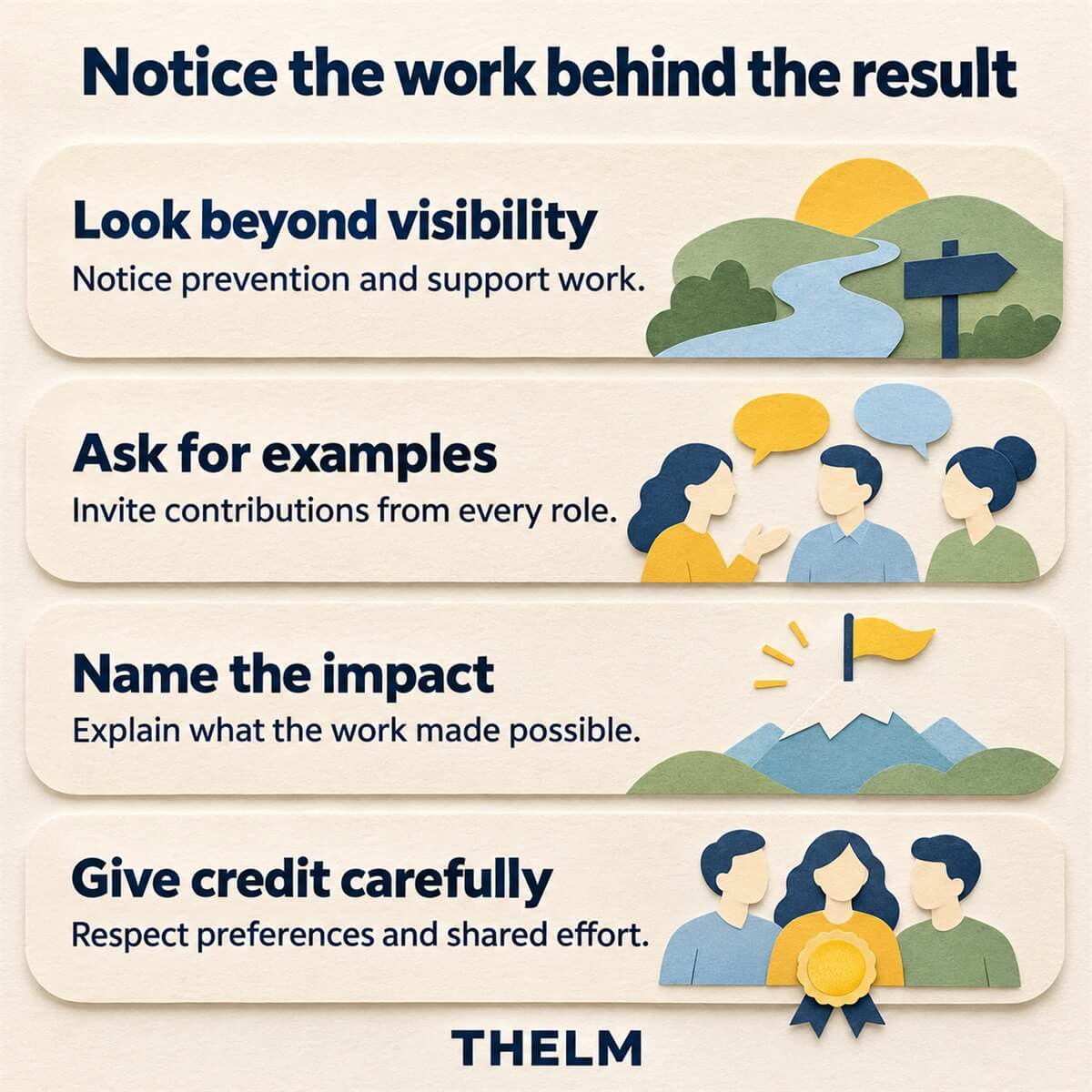
Look behind the headline result
When a project succeeds, ask who made it easier for others to deliver. Who checked the information, resolved an awkward dependency, kept customers informed or helped a new starter become confident? Name the work before deciding who deserves public credit.
Be careful with claims about problems prevented. “Maintained complete records throughout the project” can be checked. “Saved the business from a major crisis” needs much stronger evidence. Appreciation does not need inflated language to be meaningful.
Use ordinary management conversations
Add a question to team reviews: “Whose contribution helped us get this done?” Ask different people and include colleagues who work elsewhere or at other times. Use one-to-ones to understand work that does not appear on the main project board.
Do not turn this into constant monitoring. The aim is to understand contributions through the work and the people involved. Collecting activity counts can reward visibility again, simply in a different form.
Examples of contributions worth noticing
| Less visible work | Evidence you could use | A specific thank-you |
|---|---|---|
| Preparing a reliable handover | Clear outstanding actions and current information | Your notes meant the next shift could continue without reconstructing the job. |
| Helping a new colleague learn | A useful explanation, practice session or guide | You made time to explain the process and check they could use it. |
| Improving routine administration | A clearer form or fewer repeated queries | Your change made the information easier for the whole team to find. |
| Resolving a recurring problem | A documented fix and checked outcome | You followed the issue through and tested whether the solution worked. |
These examples are illustrative. Use the actual contribution and its effect. Ask permission before sharing details that involve a customer, a private difficulty or information another colleague would not expect to become public.
Give credit without assigning a permanent support role
Thanking someone for helping colleagues should not make them the automatic owner of everyone’s extra work. Check whether the support is recognised in their workload and whether other people should share it.
Similarly, avoid praising someone primarily for working late or repeatedly rescuing an under-resourced project. Acknowledge the effort, then address the conditions that made the rescue necessary. The message should not be that exceeding agreed hours is the route to being valued.
Match the recognition to the person
Some people welcome a team mention; others prefer a private message or a note to their manager. Ask rather than assuming that quieter employees always want private recognition. The preference belongs to the individual, not a personality category.
The NHS staff recognition framework emphasises meaningful informal appreciation in everyday interactions. That is a useful starting point for building a habit of noticing specific work.
At your next project review, identify one contribution that made the result possible but has not yet been acknowledged. Check the facts, thank the person in a suitable way and consider whether the work also needs better time, resources or formal recognition.
Related guides
- Employee Thank-You Messages for Different Situations
- How to Set Fair Employee Recognition Criteria
- How to Ask Employees What Recognition They Actually Value
Published as part of THELM's guide library on 2 November 2026. The archive date places this guide within the series; advice and sources were reviewed on 2 November 2026.